


















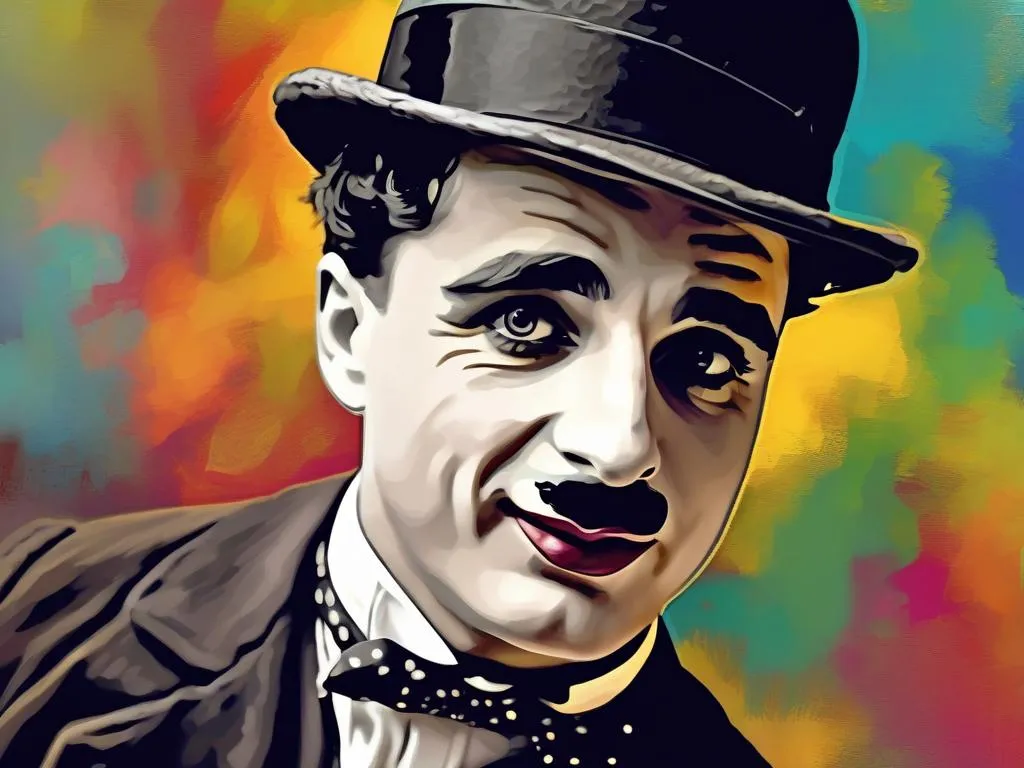
You know, there’s something about Charlie Chaplin that feels like he’s always been a part of my life. I remember the first time I saw him on screen—it was on an old VHS tape my dad had, and I couldn’t have been more than seven or eight. The way he moved, that silly walk, the way he could make me laugh without saying a single word—it felt like magic. Even as a kid, I could tell there was something deeper going on beneath the surface. He wasn’t just funny; he was real.
Growing up, I didn’t really understand the weight of his story, the fact that this man who brought so much joy to the world had come from such a hard place. Chaplin’s life started in poverty, in London, with a father who abandoned him and a mother who struggled with mental illness. Can you imagine? And yet, he turned that pain into something beautiful. It’s like he took all the darkness he’d lived through and transformed it into light, not just for himself, but for the whole world.
What always strikes me about Chaplin is how universal his art is. You don’t need to understand English or any language to laugh at his antics or feel the emotions he’s conveying. That’s the power of silence, you know? It’s something I’ve tried to bring into my own music—that idea that you don’t always need words to communicate something profound. There’s a scene in City Lights where The Tramp meets the blind flower girl, and the way he looks at her—it’s pure, unfiltered love. I’ve watched that scene so many times, and every single time, it hits me in the gut. It’s like he’s reminding us that even in a world full of noise, the quiet moments can speak the loudest.
And then there’s his resilience. I mean, The Tramp is the ultimate underdog, right? He’s always getting knocked down—by society, by bad luck, by life itself—but he never stays down. That’s what I think makes him so relatable. We’ve all been there, feeling like the world is against us, but Chaplin’s character keeps going, keeps smiling, keeps finding a way to make the best of it. It’s a message that’s just as relevant today as it was back then.
Chaplin wasn’t just a comedian, though. He was a visionary, someone who used his art to say things that needed to be said. Take The Great Dictator, for example. At a time when the world was on the brink of war, he had the guts to stand up and mock Hitler. Can you imagine the courage that took? He wasn’t afraid to use his platform to speak truth to power, even when it came at great personal risk. It’s something I admire so much—the way he believed in the power of art to change the world.
I think about that a lot, especially now, when the world feels so divided. Chaplin’s films were never just about entertainment; they were about connection. He wanted to remind us of our shared humanity, to make us laugh but also make us think. That’s why his work has lasted so long. It’s not just nostalgia; it’s because the things he was talking about—love, hope, resilience—are timeless.
There’s a moment in Modern Times where The Tramp gets caught in the gears of a factory machine, literally being swallowed up by the system. It’s hilarious, but it’s also heartbreaking. It’s Chaplin’s way of saying, “Look, this is what we’re doing to ourselves. We’re letting the machines control us, letting the system grind us down.” And yet, even in that moment, he finds a way to make us laugh. That’s his genius—he could take the darkest parts of life and turn them into something beautiful.
I’ve had moments in my own life where I’ve felt like that—like I’m just a cog in a machine, like the world is too big and too broken for one person to make a difference. But then I think about Chaplin, about how he turned his pain into art, how he used his voice to inspire millions. It’s a reminder that even the smallest of us can leave a mark, that our struggles don’t define us—they shape us.
When Chaplin returned to the U.S. in 1972 to accept his honorary Oscar, he got a 12-minute standing ovation. Can you imagine that? Twelve minutes of pure, unadulterated love from the people he’d spent his life entertaining. It’s proof, I think, that his impact wasn’t just fleeting. It wasn’t just about the laughs or the tears; it was about the way he made people feel. He reminded us that even in the darkest times, there’s always a reason to laugh, always a reason to hope.
So here’s the thing I keep coming back to: what would the world look like if we all had a little more of Chaplin in us? What if we could find the humor in the hard times, the beauty in the brokenness? What if we could stand up to the machines, to the systems, to the powers that try to grind us down, and say, “No, I’m not just a cog. I’m a human being, and I matter.” Maybe that’s the real legacy of The Tramp—not just the films or the laughs, but the idea that no matter how small we feel, we have the power to make a difference.
I’ll leave you with this: the next time life feels heavy, the next time you feel like the world is too much, put on a Chaplin film. Let yourself laugh, let yourself cry, let yourself remember that even in the hardest moments, there’s always a little light. And maybe, just maybe, that light can guide you forward.